bf1e605e32056b8a9f2eff03000bf66e.tmb-hero-image.jpg?Culture=en&sfvrsn=721b0bba_1 "Bearded man enjoying an outdoor barbecue with a drink in hand, standing next to a grill on a sunny day, creating a relaxed backyard gathering vibe")
MEET THE AGENCY
Inside Story
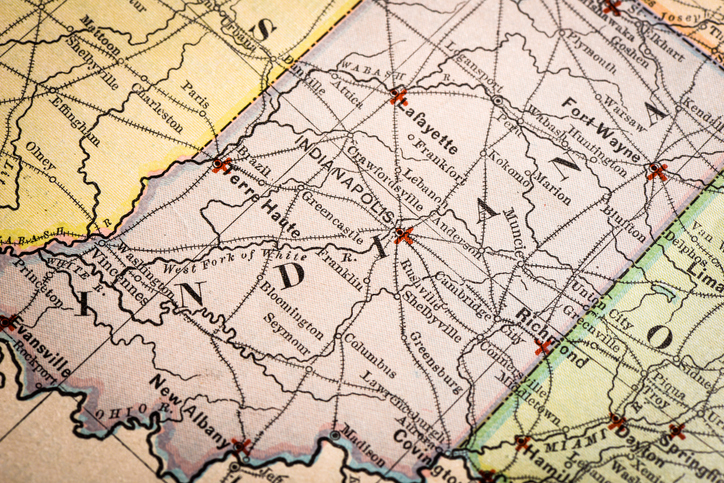
Quick answer: When you move to Indiana, you need auto insurance that meets Indiana's minimum liability requirements. The Indiana Bureau of Motor Vehicles gives new residents 60 days to register their vehicle and get an Indiana driver's license. Don't cancel your existing policy until your new Indiana policy is active. Indiana Farm Bureau Insurance has an office in every one of Indiana's 92 counties and can help you get set up before you arrive.
Welcome to Indiana. Whether you're here for a new job, to be closer to family, or because you fell in love with the Hoosier State's mix of affordability and community, there's a lot to sort out after a move. Somewhere on your to-do list, between changing your address and finding the nearest coffee shop, is switching your car insurance.
It doesn't have to be complicated. Here's some insight on what you may need to do, what Indiana requires and how you may save money in the process.
These steps can help you maintain coverage during the switch:
Keep your current policy active. This is an important rule. Do not cancel your existing insurance until your new Indiana policy is in effect. Even a single day without coverage counts as a lapse and can result in higher rates going forward or a claim denial.
Contact your current insurer. Let them know you're moving to Indiana. Some national carriers can transfer your policy to a new state, but coverage terms, rates and available discounts may change. It's worth comparing.
Get quotes from Indiana insurers. Collect free quotes from multiple companies, including Indiana Farm Bureau Insurance, so you can compare pricing, coverage and service. Don't just compare prices. Compare what you're getting for that price.
Purchase your new Indiana policy. Once you've chosen the best option for your circumstances, buy your new policy and get your proof of insurance.
Cancel your existing policy. Only cancel your existing policy after your new policy is active. Call your previous insurer and confirm the cancellation date matches the start date of your new policy. This will avoid a gap in coverage.
Visit the Indiana Bureau of Motor Vehicles (BMV). Within 60 days of moving to Indiana, register your vehicle and get your Indiana driver's license. You'll need proof of insurance, proof of address, your Social Security number and your certificate of title.
Indiana law requires all drivers to carry minimum liability insurance, commonly referred to as 25/50/25 coverage:
Coverage | Minimum Required |
Bodily injury liability (per person) | $25,000 |
Bodily injury liability (per accident) | $50,000 |
Property damage liability (per accident) | $25,000 |
Uninsured/underinsured motorist coverage | Required unless rejected in writing |
Important for people moving from no-fault states: Indiana is an at-fault (tort) state. That means the driver who is found responsible for causing an accident is held responsible for the other driver's damages. If you're coming from a no-fault state like Michigan, Florida or New York, your insurance will work differently in Indiana. Typically, the at-fault driver's liability coverage pays, not your own auto policy coverage. Make sure your Indiana policy reflects this system. (Related: If someone hit my car, whose insurance should I call?)
Your premium in Indiana depends on several factors: your age, marital status, where you live, where your vehicle is garaged, how you use your vehicle, your driving record and the vehicle itself. But there's a bigger factor many people don't think about, the state you're moving from.
Each state has different insurance requirements, risk profiles and regulations. The state you're moving from may not have the same exposure levels as Indiana, which can affect your premium. Additionally, you may be carrying coverage that exceeds what you may need or what is required in Indiana.
An Indiana-only company like Indiana Farm Bureau Insurance prices policies based solely on Indiana risk factors, not national exposures. Getting a free quote helps you right-size your coverage and understand your actual costs. If you're moving from a high-cost state like California, New Jersey or Florida, your auto insurance premium may decrease in Indiana. Moving from a lower-cost state might mean a slight increase. The only way to know for sure is to get a quote.
When | What to Do |
Before you move | Get Indiana auto insurance quotes. Indiana Farm Bureau Insurance's Advance Quote Discount can help save you money if you quote seven or more days before your policy effective date. |
Week 1 | Purchase your Indiana auto policy. Cancel your existing policy only after the new one is active. |
Weeks 2-4 | Visit the Indiana BMV to register your vehicle and get your Indiana driver's license. Bring proof of insurance, proof of address, Social Security number and title. |
Within 60 days | Complete all vehicle registration and license transfers. The BMV allows 60 days for new residents. |
Indiana Farm Bureau Insurance offers several discounts that may help lower your premium as a new Indiana resident:
Advance Quote Discount — Available to new customers who quote seven or more days before their policy effective date. Perfect for people planning ahead before a move.
Multi-Line Discount — Save up to 18% on auto and 20% on home insurance when you insure both with Indiana Farm Bureau Insurance.
Paperless Discount — Save up to 5% on qualifying auto premiums by signing up for paperless policy documents.
Drive Less, Save More Discount — Save up to 10% if you drive less than 12,000 miles per year.
DriveTrend® Discount — Indiana Farm Bureau Insurance's telematics program provides feedback on your driving habits and may save you up to 15% on qualifying auto premiums.
View the full list of Indiana Farm Bureau Insurance discounts to see what you may qualify for.
Planning a move to Indiana?
Get a free auto insurance quote now, and save with the Advance Quote Discount when you quote seven or more days before your policy starts.
Yes. Your car insurance policy must be written in the state where you reside. Some national carriers can write a new policy in Indiana, but each state has different requirements and rates. It's worth comparing quotes from Indiana-based companies like Indiana Farm Bureau Insurance, which specializes in Indiana coverage and has offices in all 92 counties.
Yes. The Indiana BMV requires proof of at least 25/50/25 liability coverage to register a passenger vehicle. You must present this proof when you visit the BMV.
The BMV allows new residents 60 days to register vehicles and obtain an Indiana driver's license. However, you should typically have an Indiana auto insurance policy in place as soon as you arrive. Don't wait for the full 60 days to get coverage.
It depends on where you're moving from. Rates are determined by factors including your location, vehicle, driving record and the risk profile of your area. Moving from a high-cost metro area to a smaller Indiana town often means lower premiums. The best way to find out is to request a free quote.
Most of Indiana does not require emissions tests. The exceptions are Lake County and Porter counties (northwest Indiana), where vehicles manufactured after 1975 with a gross vehicle weight rating of 9,000 pounds or less must undergo emissions testing every two years.
Indiana Farm Bureau Insurance is an Indiana-based company with offices in all 92 counties. Because we only insure Indiana residents, our rates reflect Indiana-specific risks, not national exposures. We've been serving Hoosiers for more than 90 years, and our agents are part of their local communities.
Contact Us

*Securities & services offered through registered representatives of FBL Marketing Services, LLC, 225 South East Street, Indianapolis, IN 46202, 317-692-7628, Member SIPC. FBL Marketing Services, LLC, is not affiliated with Indiana Farm Bureau, Inc. or United Farm Family Life Insurance Company.
© 2026 Indiana Farm Bureau Insurance. All Rights Reserved. Farm Bureau, FB, and
the national Farm Bureau logo are trademarks of the American Farm Bureau Federation.


