The heat and humidity of an Indiana summer are not to be taken lightly. During the hottest months of the year, your air conditioning unit works hard to keep you and your home cool. If your air conditioning system isn’t efficient, you may see higher bills, unnecessary equipment wear and tear, and inconsistent cooling in your home.
If you haven’t been paying much attention to your air conditioner yet, don’t sweat it! By adopting a couple of new maintenance habits and smart cooling strategies, you can reduce energy usage and extend the life of your air conditioner.
Replace your air conditioner (AC) filter regularly
Replacing or cleaning your AC filter is one of the easiest ways to increase efficiency. A dirty filter negatively impacts the air flow, making your air conditioner work harder. That in turn wastes energy.
Energy Star, a voluntary program of the U.S. Environmental Protection Agency (EPA), recommends that you check your AC filter every month. Change it when it looks dirty, but at a minimum replace the filter once every three months. If you need help remembering when to check and change your filter, consider adding a reminder on your mobile phone!
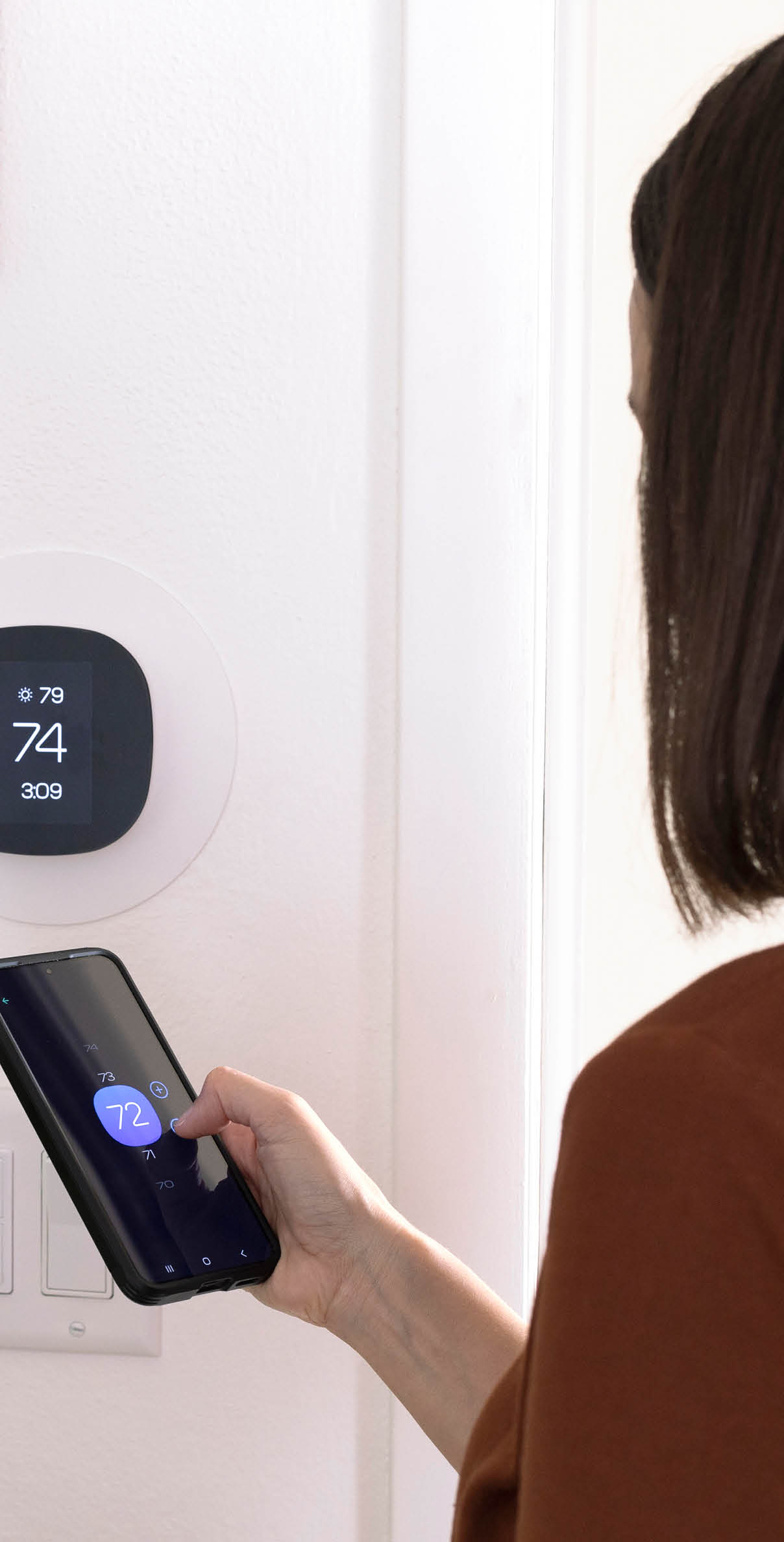
Invest in a programmable thermostat
With a programmable thermostat, you can set it and forget it. According to the U.S. Department of Energy, with the proper timing and temperature settings, a programmable thermostat can help save as much as 10% on your heating and cooling bills. Simply set the temperatures you want for when you’re home and when you’re out. If your schedule happens to change, you can override your settings to avoid discomfort.
Seal leaks around doors and windows
The leaks that develop over time in a home can cause serious efficiency issues. Energy Star estimates that properly sealing a home saves the average homeowner 15% on heating and cooling costs. In addition to energy savings, you reap the benefits of reduced outside noise, less pollen and dust entering the home, and better humidity control.
The Energy Star website provides basic instruction on how to get started sealing leaks in your attic, basement, and around windows and doors.
Keep ducts clear
Do not block or obstruct your heating and cooling ducts inside the home. This may seem like a no-brainer, but things happen. So, yes, there are times you might have to sacrifice the perfect couch position in favor of duct breathability. If you suspect further duct issues, the U.S. Department of Energy website provides some guidance on duct system maintenance and upgrades.
Reduce the amount of heat that enters your house
During a sunny summer day, heat enters through the windows of your home. One simple way to help your air conditioner perform better is to lighten its workload from the start. In the heat of the day, close your blinds or curtains to help mitigate the rising temperatures.
The U.S. Department of Energy even rates certain window attachments based on their ability to insulate your home. They have recommendations for interior attachments like blinds and shades as well as exterior attachments like shutters, awnings and glass films.
Use your ceiling fans properly
The U.S. Department of Energy says that using a ceiling fan properly will allow you to raise your thermostat around 4 degrees without sacrificing any comfort. In the summer, make sure your fans are turning counterclockwise to enjoy a cooling breeze. Also, ensure that you purchase and install fans that are the correct size needed to cool each specific room.
In addition to the tips above, consider finding a trusted contractor to inspect your AC unit each year. They can also perform a tune up to keep your AC running in tip top shape. If you catch potential issues early, they will likely be less costly to prepare. Remember, keep an eye on your air conditioner and keep your cool!
Inside Story is for educational and informational purposes only. Inside Story is compiled from various sources, which may or may not be affiliated with our family of companies, and may include the assistance of artificial intelligence. While we strive to provide accurate and reliable content, we make no warranties or guarantees about its completeness, accuracy, or reliability, and are not responsible for the content of any third-party sources or websites referenced herein. The inclusion of any content does not establish a business relationship or constitute our endorsement, approval, or recommendation of any third party. Testimonials and examples provided are for illustrative purposes only and do not guarantee future or similar results or outcomes, and may not consider individual circumstances, goals, needs, or objectives. Inside Story does not provide legal, tax, or accounting advice. For individual guidance, please consult a qualified professional in the appropriate field.
Coverages subject to policy terms, conditions, and exclusions. Subject to underwriting review and approval.