bf1e605e32056b8a9f2eff03000bf66e.tmb-hero-image.jpg?Culture=en&sfvrsn=721b0bba_1 "Bearded man enjoying an outdoor barbecue with a drink in hand, standing next to a grill on a sunny day, creating a relaxed backyard gathering vibe")
MEET THE AGENCY
Inside Story
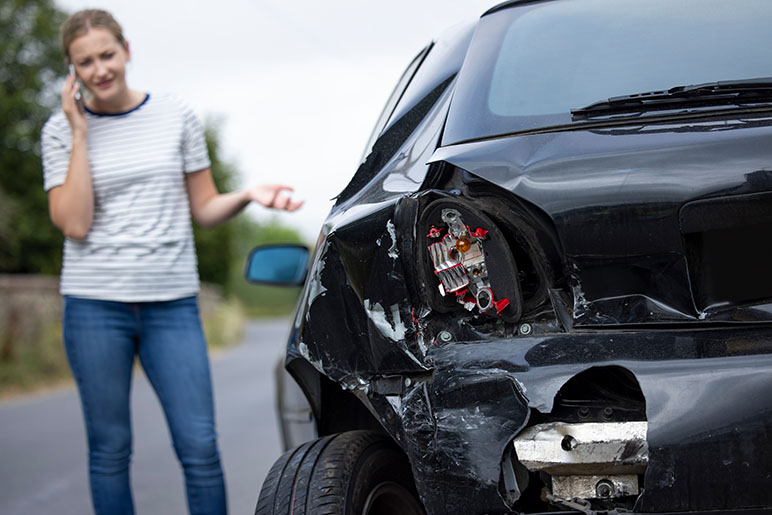
Quick answer: Call your own insurance company or file a claim with them online first, even if the other driver caused the accident. Indiana is an at-fault state, but your insurer can help start your claim right away, arrange a rental car if you have that coverage, and even handle communication with the other driver's carrier on your behalf.
A car accident can throw your whole day sideways. Your hands might shake and your mind might race through a dozen questions at once. And somewhere between the adrenaline and the exchange of phone numbers, one thought keeps coming back: whose insurance am I supposed to call?
The short version: call yours. But there's more to it than that, especially if you're driving in Indiana. Here are some steps to consider taking after an accident, which coverage typically applies, and how the claims process actually works after someone hits your car.
The first few minutes after a collision matter more than most people realize. What you do (and don't do) at the scene may shape how smoothly your claim goes later. Here's the order that tends to work best:
Check for injuries. Your safety and the safety of your passengers are a top priority. If anyone is hurt, call 911 immediately.
Move to a safe spot. If the vehicles are drivable, consider pulling off the road and out of traffic. Turn on your hazard lights.
Call the police. In Indiana, you're required to report any accident that causes injury, death or property damage over $1,000. Even for minor fender-benders, a police report creates an official record that can help during the claims process. (Related: How long does a speeding ticket stay on your record in Indiana?)
Exchange information with the other driver. Get their name, phone number, insurance company, policy number, driver's license number and license plate information. Give them yours in return.
Document everything as best you can. Take photos of all vehicle damage, the accident scene, street signs, traffic signals, skid marks and any visible injuries. Snap a picture of the other driver's insurance card and license plate.
Talk to witnesses. If anyone saw what happened, ask for their name and contact information. Witness accounts can be valuable if fault is disputed.
Call your insurance company. This is the step that often trips people up, and it's an most important one.
It seems backward. Someone else hit you, so shouldn't their insurance handle it? Most often, yes. However, contacting your insurer first is a good idea for a few practical reasons.
Your insurer works for you. The other driver's insurance company will be primarily focused on their client. Your insurer can do the same for you, even if you are not at fault. They can help walk you through the claim, explain coverage, and may advocate on your behalf if fault is disputed.
You may be able to get repairs started faster. If you have collision coverage on your policy, your insurer may authorize repairs right away, without waiting for the other carrier to accept fault. You'll need to pay your deductible upfront, but your company generally pursues reimbursement from the at-fault driver's insurer through a process called subrogation.
You may have added protection if the other driver can be identified and happens to be uninsured. Roughly 16% of Indiana motorists drive without insurance, according to the Insurance Research Council. If the person who hit you doesn't have insurance, your uninsured motorist coverage may step in to help cover your medical expenses and vehicle damage.
It can help satisfy your policy requirements. Most auto insurance policies require you to report any accident involving your covered vehicle—regardless of fault. Waiting too long, or not reporting at all, could create complications if you need to file a claim later.
If you have auto insurance with Indiana Farm Bureau Insurance, you can file a claim on our mobile app, online, by calling our customer service center at 800-723-3276 or you can reach out to your local agent directly.
What you avoid doing at the scene can be just as important as what you actually do. A few common mistakes could complicate your claim or even weaken your position. Consider these tips if you find yourself in an accident:
Don't admit fault. Sometimes even saying "I'm sorry" could be interpreted as an admission of fault or responsibility, so it’s best to stick with exchanging facts: names, numbers and insurance details.
Don't agree to skip filing a police report. The other driver might suggest handling it "just between us." Without an official report, you have no impartial record of what happened if a dispute arises later.
Don't give a recorded statement to the other driver's insurer unless your claim adjuster says it’s okay. You're not required to, and anything you say could be used against you in an attempt to reduce or deny your claim. Let your insurance company handle that conversation unless your claims adjuster gives you the green light. If you do speak with the other driver’s insurer, stick to the facts and tell your perspective of what happened. Don't make any settlement if you feel pressured or uncomfortable, and talk to your own adjuster if you do feel pressured.
Don't accept a quick cash settlement at the scene or from the other driver’s insurance carrier. You may not know the full extent of the damage or potential injuries until later. If you accept a payout, you generally can't go back and ask for more.
Don't post about the accident on social media. Photos, comments or even check-ins near the accident location can be pulled into a claims dispute. Keep the details between you, the police and your insurer.
Don't leave the scene. Leaving the scene of an accident is illegal in Indiana and could result in criminal charges, even if the accident wasn't your fault.
Indiana is what's known as an at-fault state. This means the driver who caused the accident is held financially responsible for the other driver's damages: medical bills, vehicle repairs, lost wages and more.
Here's what that looks like in practice:
If the other driver is clearly at fault and has insurance, their liability coverage may pay for your damages up to their policy limits.
If fault is shared, Indiana's modified comparative negligence rule applies and your compensation would be reduced by your percentage of fault. If you're found 51% or more responsible, you can't recover any damages from the other driver.
If the other driver is uninsured or underinsured, your own uninsured motorist/underinsured motorist (UM/UIM) coverage may help fill the gap (assuming you didn't waive this coverage in writing when you bought your policy).
Indiana requires all drivers to carry minimum liability coverage of 25/50/25:
$25,000 for bodily injury per person
$50,000 for bodily injury per accident (two or more people)
$25,000 for property damage per accident
These minimums are the legal floor, not necessarily a recommendation. A single serious accident can exceed these limits quickly. That's one of many reasons many Indiana drivers choose higher coverage, and why umbrella insurance can be an added layer of protection.
The type of coverage that applies depends on the circumstances of the accident. Here's a breakdown of some common scenarios:
Their liability coverage generally pays for your vehicle repairs, a rental vehicle while yours is being repaired and any applicable medical expenses, up to their policy limits. You typically won't pay a deductible in this scenario. Your insurer coordinates with the other driver’s insurer to settle the claim.
Your uninsured motorist (UM) coverage generally applies. This can help pay for your medical costs and, depending on your policy, property damage. In Indiana, every new auto policy must include UM coverage unless you reject it in writing.
Your underinsured motorist (UIM) coverage may help cover the difference between what the other driver's policy pays and what your actual expenses are.
If the other driver left a note or you have their information, their liability insurance typically applies. If it's a hit-and-run with no information, your collision coverage typically would apply.
Your collision coverage may pay for your vehicle repairs regardless of who's at fault. You'll pay your deductible, and your insurer will typically pursue the other driver's carrier for reimbursement. (Related: Does a windshield claim increase your car insurance in Indiana?)
Medical payments coverage (MedPay) can help cover medical expenses for you and your passengers after an accident, regardless of fault. This coverage also may apply if you're hit by a vehicle while walking or riding a bicycle.
Hypothetical Scenario*: You're stopped at a red light on U.S. 31 in Greenwood when a driver rear-ends you. The impact cracks your bumper and triggers your airbag warning light. Your neck is sore, but you otherwise feel fine. Here's how the process typically unfolds:
At the scene: You check yourself and your passenger. You’re both shaken but okay. You call 911. While waiting for the officer, you exchange information with the other driver and take photos of both vehicles, the intersection, and the other driver's license plate and insurance card.
The police report: The officer documents the scene, takes statements from both drivers, and notes that the other driver was following too closely. You receive the report number before leaving.
Your first contact: From the parking lot of a nearby gas station, you file a claim with Indiana Farm Bureau Insurance on our mobile app, online, by calling 800-723-3276 or by contacting your agent.
Next steps: An adjuster inspects your vehicle and prepares a repair estimate. Because you have collision coverage, repairs are authorized right away, and you pay your deductible, and Indiana Farm Bureau Insurance handles the rest. Your MedPay coverage takes care of a visit to your doctor for the neck soreness. If you're insured with Indiana Farm Bureau Insurance, there are ways to streamline the claims process like opting in for photo estimates, choosing a body shop in our network of preferred shops and more.
Behind the scenes: Your insurer contacts the other driver's carrier and begins subrogation, the process of recovering what they paid out (including your deductible) from the at-fault driver's liability insurance.
Resolution: The other driver is confirmed at fault. Their insurer reimburses your carrier, and your deductible is returned to you. The claim is closed.
Having these details ready when you file your claim with your insurer may help speed up the process:
Your policy number
Date, time and location of the accident
A description of what happened
Names, phone numbers and insurance details of everyone involved
Year, make and model of all vehicles
Names and contact information for any witnesses
The police report number (or the responding department's name)
Photos of the damage, scene and any injuries
Description of any injuries sustained
The more thorough your documentation, typically means the faster your claim can move forward.
Once you've filed, the process generally follows a predictable path. Here's a rough timeline so you know what's coming:
Step | What Happens |
After you file | You file your claim (on our app, online, by phone, or through your agent). A claim number is assigned and an adjuster will be scheduled. |
Inspection | An adjuster inspects your vehicle and prepares a repair estimate. If your car can’t be driven and you have rental coverage, a rental vehicle is arranged. (Related: Does car insurance cover rental cars?) |
Repair | Repairs may be authorized. Your insurer begins coordinating with the other driver's carrier if fault is being determined. |
After the repair | Vehicle may be repaired. If subrogation applies, your insurer pursues reimbursement from the at-fault driver's carrier. |
Resolution | Claim is settled. If you paid a deductible and the other driver was at fault, your deductible is reimbursed once subrogation is complete. |
You can't plan for an accident, but you can be more prepared if one happens. Keep these items in your glove compartment so you have them when it matters most:
🚗 Indiana Driver's Accident Checklist
Print & Keep in Your Glove Box
☐ Your insurance company's name and your auto policy number
☐ Your agent's name and phone number
☐ Indiana Farm Bureau Insurance claims line: 800-723-3276
☐ A pen and notepad (phone battery can die at the worst time)
☐ Space to write: other driver's name, phone, insurance company, policy number, license plate, driver's license number
☐ Reminder: Take photos of all damage, the scene, street signs, and the other driver's insurance card
☐ Reminder: Get witness names and contact info
☐ Reminder: Call the police, required in Indiana for injury or damage over $1,000 and generally a best practice
☐ Reminder: Do NOT admit fault, sign anything or post on social media
💡 Tip: Screenshot this checklist and save it to your phone's photos, or print it off from your computer and place it in your glove box.
If someone damages your car and leaves without providing their information, you're dealing with a hit-and-run. Here's what to do:
Call the police and file a report. Hit-and-run is a crime in Indiana, and the report creates an official record of the incident.
Check the area for security cameras: parking lots, nearby businesses and intersections may have access to footage that could help identify the other driver.
Document the damage with photos.
File a claim with your insurance company. Your collision coverage may cover the repairs, depending on your policy.
You're under no obligation to speak with the other driver's insurer, and you're often times you’re better off letting your insurance company handle that communication. The other carrier's role is to protect their client, not you. They may ask leading questions or push for a quick settlement that doesn't fully account for your expenses.
If the other driver's insurance company does contact you, it's generally okay to confirm basic facts (the date and location of the accident), but you should generally avoid giving recorded statements unless your claims adjuster advises you to participate. This can help you avoid admitting any fault or accepting a settlement offer before speaking with your insurer. If you feel pressured by the other driver’s insurer to take a settlement or feel uncomfortable during the conversation, let your claims adjuster know.
If someone else caused the accident, your rates typically won't increase. Most insurance companies, including Indiana Farm Bureau Insurance, typically don't raise premiums for not-at-fault claims.
That said, your claims history is one factor among many that affects your premium. Location, driving record, number of drivers on your policy and the type of vehicle you drive all play a role. The best way to know how a claim might affect your rate is to ask your local agent directly.
A claim generally stays on your insurance record for about three to five years, though the impact on your premium typically fades over time.
Have questions about your auto coverage?
Your local Indiana Farm Bureau Insurance agent can walk you through your policy, explain your coverage options, and help you select protection that fits your needs.
Yes. Always call your own insurance company after any accident, regardless of who you believe is at fault. At Indiana Farm Bureau Insurance, you can file your claim on our mobile app, online, by calling 800-723-3276 or by contacting your agent. Your insurer needs to know about the incident, can help you start your claim and can coordinate with the other driver's carrier. In Indiana, most policies require prompt reporting of any accident involving your covered vehicle.
Not initially. Typically you have no obligation to contact the other driver's insurer. Your insurance company typically handles communication with the other carrier as part of the claims process. If the other insurer contacts you, you can decline to give a recorded statement. If your claims adjuster says it’s ok to speak with the other driver’s insurance carrier, stick to the facts and tell your perspective of what happened. If you feel pressured or uncomfortable while speaking with the other insurer, let your claims adjuster know.
If the at-fault driver is uninsured, your uninsured motorist (UM) coverage may pay for your medical expenses and, depending on your policy, property damage. Indiana law requires every new auto policy to include UM coverage unless the policyholder rejects it in writing. Driving without insurance in Indiana is illegal and can result in fines and license suspension. (Related: What happens when your car insurance lapses?)
A car insurance claim typically stays on your record for three to five years. Not-at-fault claims typically have little to no impact on your premium, though the specifics depend on your insurer and policy.
If you weren't at fault for the accident, your rates are not typically impacted. However, your premium is based on multiple factors beyond your claims history, including your location, driving record and the vehicle you drive. Your local agent is the best person to answer questions about your specific premium.
Check for a note from the other driver. If they left contact and insurance information, file a claim with your insurer. If no note was left, call the police to file a hit-and-run report, document the damage with photos and contact your insurance company. Your collision coverage may apply. Your claims adjuster may advise you to contact the other driver’s insurance company as part of the process. Remember to stick to the facts and let your claims adjuster know if you feel pressured or uncomfortable during any conversation with the other insurer.
Indiana requires all drivers to carry at least 25/50/25 in liability coverage: $25,000 bodily injury per person, $50,000 bodily injury per accident, and $25,000 property damage per accident. Every new policy must also include uninsured motorist coverage unless waived in writing. Keep in mind this is simply the legal minimum and may not be enough to fully protect you in a serious accident. Costs of injuries, medical treatment, lost income, vehicle damage, and other claims can quickly exceed minimum coverage limits. Depending on your circumstances, you may want to consider higher liability limits or additional coverage. Talk to your Indiana Farm Bureau Insurance agent to determine what coverage options are best for you.
Contact Us

*Securities & services offered through registered representatives of FBL Marketing Services, LLC, 225 South East Street, Indianapolis, IN 46202, 317-692-7628, Member SIPC. FBL Marketing Services, LLC, is not affiliated with Indiana Farm Bureau, Inc. or United Farm Family Life Insurance Company.
© 2026 Indiana Farm Bureau Insurance. All Rights Reserved. Farm Bureau, FB, and
the national Farm Bureau logo are trademarks of the American Farm Bureau Federation.


